
TEVIMO is a research network funded by the Spanish state research program (RED2024) that started in May 2025 and will coordinate networking and dissemination activities around Tissue engineering approaches for the development of healthy and pathological in vitro tissue models. Twelve partners participate in this network coordinated by Prof Gloria Gallego-Ferrer.
Grant RED2024-153599-T funded by MICIU/AEI /10.13039/501100011033

Follow this link for more information about the network groups and workplan.
TEVIMO NEWS
- Upcoming workshops 3, 7 & 9, Bilbao & San Sebastián
- Upcoming workshops 6, 10 & 12, Barcelona on the 16th of June.
- TERMIS 2026, Palma de Mallorca from the 21st to the 24th of April.
- Workshops 1 & 2 in Madrid on the 27th of January.
- Workshop 11, Valladolid, 15th September 2025.
Upcoming worshops in Barcelona, on the 16th of June:
Three workshops jointly planned by the three Barcelona groups in the network, a day with an intense agenda and high expected attendance!
- WS6. Study of cell membrane proteins using nanotechnology (Anna Lagunas, IBEC, Barcelona).
- WS10. Mimicking the extracellular matrix with synthetic peptides. From 2D models to 3D matrices (Carles Mas-Moruno, BBT, UPC, Barcelona).
- WS12. Non-invasive mechanical characterisation of 3D cultures (Manuel Salmerón Sánchez, IBEC, Barcelona).
TEVIMO at the TERMIS 2026 international conference. We had several contributions from network members and a TEVIMO network symposium selected for inclusion in the final scientific program of the conference.
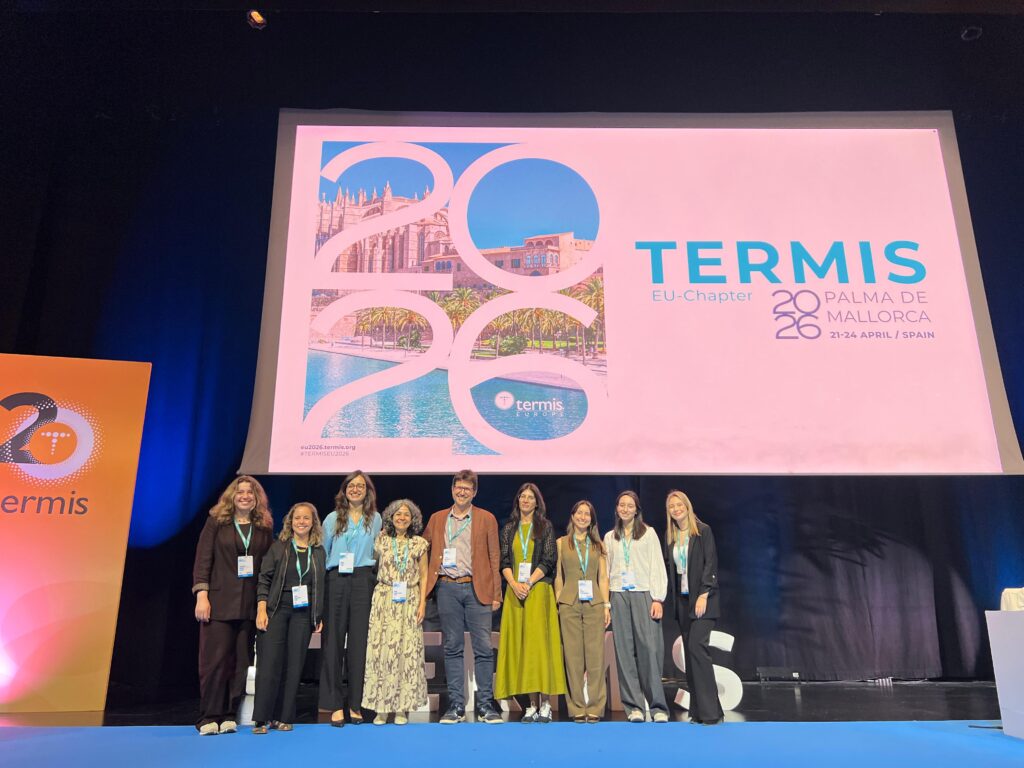
«Extracellular Matrix–Inspired Biomaterials: From Synthesis and Processing to Tissue Regeneration». WS1 & WS2 TEVIMO’s workshops took place the 27th of January 2026 at the Facultad de Farmacia (UCM) & the CSIC’s Instituto de Ciencia y Tecnología de Polímeros (ICTP) in Madrid.
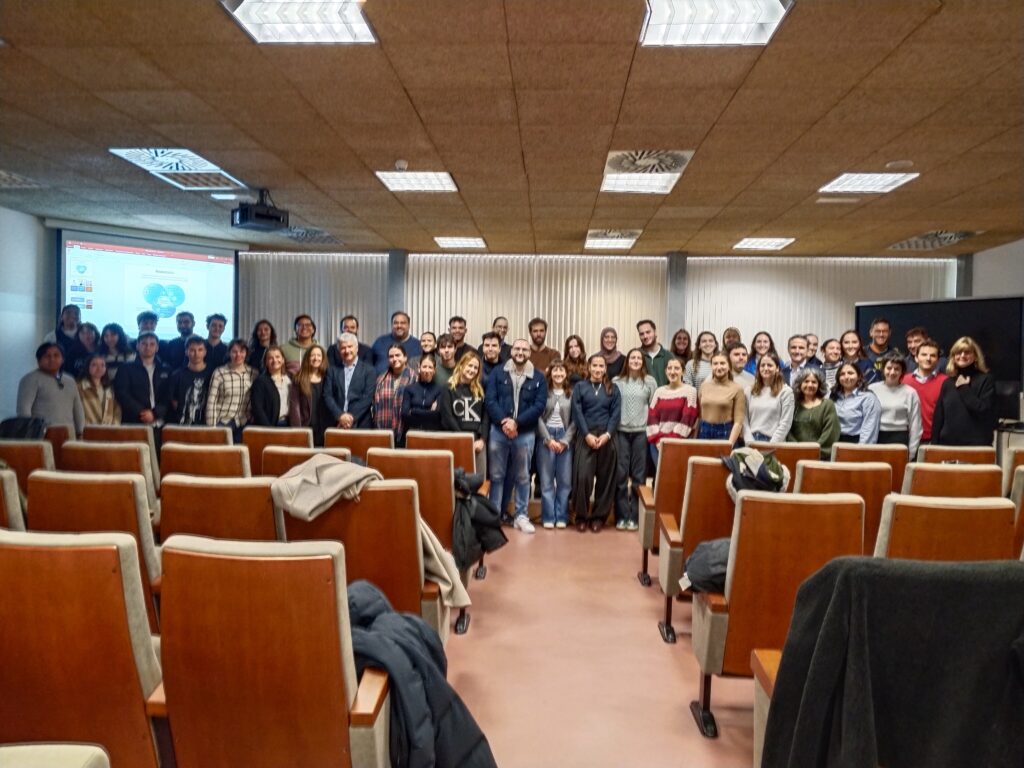
«Discussion of Trends in Biomaterial Development for Advanced Tissue Engineering Applications». WS11 TEVIMO’s workshop took place the 15th of September 2025 in a webinar format from the Bioforge group at the Universidad de Valladolid.
Organized in a roundtable format, this workshop brought together members of the TEVIMO network and external academic experts. The session addressed key issues related to the development of biomaterials for advanced tissue engineering applications, including the balance between material complexity and the need for robust, scalable solutions; personalization through 3D bioprinting versus universal implants; the role of biomaterials as passive supports or as bioactive systems capable of guiding regeneration; the challenges of clinical translation, including scientific, regulatory, economic, and industrial factors; and emerging trends such as artificial intelligence-assisted design and immunomodulatory materials.
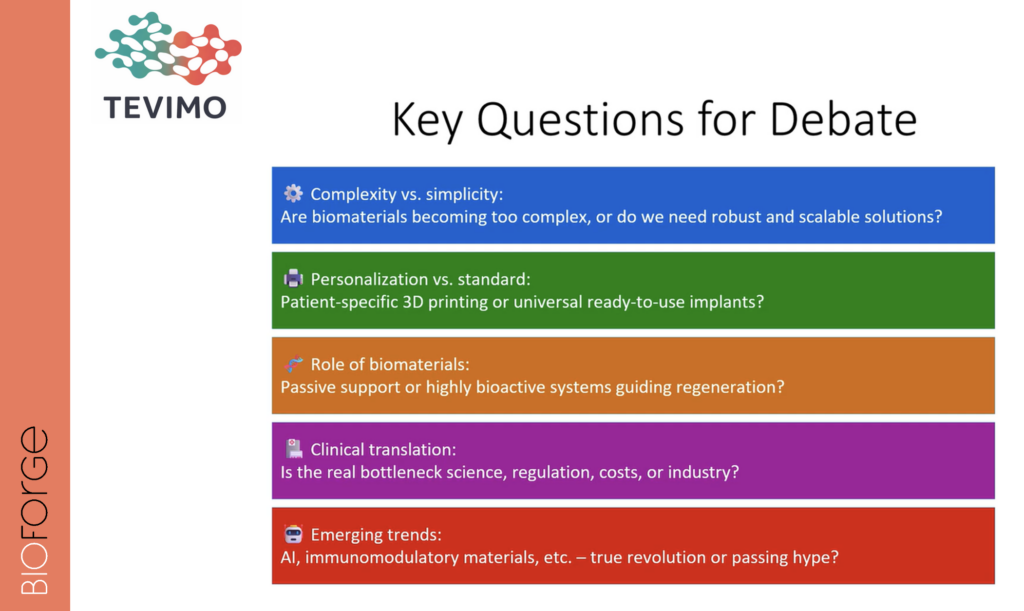
The panel addressed and debated these questions and more:
New Generations of Biomaterials: Are we moving toward biomaterials that are too complex and difficult to bring to the clinic, when perhaps what we need are simpler, more robust, and scalable solutions? Is it realistic to think that a single biomaterial can solve all tissue functions (mechanical, biological, immune), or should we accept that the key lies in hybrid systems? Many biomaterials work very well in the laboratory but fail in vivo. Is the problem the material itself or the experimental models we use for validation?
Personalization and Advanced Manufacturing: Is personalization through 3D printing and biofabrication truly the future of regenerative medicine, or will it remain an elitist luxury limited to a few top hospitals? In practice, which strategy might be more suitable: having a biomaterial perfectly adapted to each patient, or having a standard, robust, ready-to-use implant applicable universally?
Biological Interaction and Functional Regeneration: Where is it strategically most useful to focus efforts in biomaterials development? Should we prioritize materials as mere mechanical supports allowing the body to do the rest, or should we aim for highly bioactive materials that guide and take full control of tissue regeneration?
Translation and Regulatory Challenges: Is the real bottleneck in biomaterials science, regulation, manufacturing costs, or industrial interests? If a biomaterial demonstrates safety and efficacy in preclinical models, should we accept trade-offs in complexity and innovation to accelerate clinical approval?
Emerging Trends and Future Outlook: Artificial intelligence is presented as a great revolution in biomaterials design, but are we facing a real transformation or just a passing trend that will eventually fade, as has happened with other promising technologies and concepts in the past?
GROUPS PARTICIPATING IN THE NETWORK
- Prof Gloria Gallego Ferrer (Coordinadora), Centro de Biomateriales e Ingeniería Tisular (CBIT), Universitat Politècnica de València (UPV).
- Dr María Rosa Aguilar, Grupo de Biomateriales, Instituto de Ciencia y Tecnología de Polímeros (ICTP-CSIC).
- Prof. Daniel Arcos, Grupo de Investigación de Biomateriales, Universidad Complutense de Madrid (UCM).
- Prof Amaia Cipitria, Grupo de Bioengineería en Regeneración y Cancer, IIS Biogipuzkoa.
- Prof M. Teresa Donato, Unidad Mixta Investigación en Hepatología Experimental, Universidad de Valencia (UV).
- Dr Anna Lagunas, Grupo de Nanobioingeniería, Instituto de Bioingeniería de Cataluña (IBEC).
- Prof Senentxu Lanceros, Smart and Active Materials Groups at the Basque Center for Materials, Applications and Nanostructures (BCMaterials).
- Dr Marcos Latorre Ferrús, Centro de Investigación e Innovación en Bioingeniería (CI2B), at Universitat Politècnica de València (UPV).
- Prof Aitziber López Cortajarena, Grupo Nanotecnología Biomolecular, CIC biomaGUNE.
- Prof Carles Mas, Group of Biomaterials, Biomechanics and Tissue Engineering (BBT), Universitat Politècnica de Catalunya (UPC).
- Prof. José Carlos Rodríguez Cabello, BIOFORGE, University of Valladolid (UVa). BIOFORGE’s (Group for Advanced Materials and Nanobiotechnology)
- Prof Manuel Salmerón-Sánchez, Grupo de Microambientes para Medicina, Instituto de Bioingeniería de Cataluña (IBEC).
WORKPLAN OF WORSHOPS & DISSEMINATION ACTIVITIES
Termis-EU 2026 Congress – TEVIMO Symposium
WORSHOPS for network personnel:
- WS1. Polysaccharide-based hydrogels as biomimetics of the extracellular matrix (María Rosa Aguilar, ICTP-CSIC, Madrid)..
- WS2. Design of nanoparticles-based inks for 3D printing (Daniel Arcos, UCM, Madrid).
- WS3. Development of in vitro cancer microenvironments with material-based matrices (Amaia Cipitria, IIS Biogipuzkoa, San Sebastián).
- WS4. Hydrogel bioprinting (Gloria Gallego, CBIT, UPV, Valencia).
- WS5. High-throughput strategies for preclinical drug screening (M. Teresa Donato, UV, Valencia).
- WS6. Study of cell membrane proteins using nanotechnology (Anna Lagunas, IBEC, Barcelona).
- WS7. Development and application of physically active microenvironments for advanced tissue engineering strategies (Senentxu Lanceros-Mendez, BC Materials, Leioa).
- WS8. Computational modelling of tissue engineered cardiovascular constructs (Marcos Latorre, Ci2B, Valencia).
- WS9. Engineering functional protein-based biomimetic materials (Aitziber L. Cortajarena, CIC biomaGUNE, San Sebastián).
- WS10. Mimicking the extracellular matrix with synthetic peptides. From 2D models to 3D matrices (Carles Mas-Moruno, BBT, UPC, Barcelona).
- WS11. Discussion of trends in biomaterial development for advanced tissue engineering applications (José Carlos Rodríguez Cabello, Bioforge, Valladolid).
- WS12. Non-invasive mechanical characterisation of 3D cultures (Manuel Salmerón Sánchez, IBEC, Barcelona).